Introduction:
Most people walk into a clinic and say the same thing. “I think my hearing has reduced.” That’s usually all they know. And honestly, that’s enough to start. But once the testing begins, one thing becomes clear — hearing loss isn’t just one condition. It can come from different parts of the ear, and each behaves a little differently. That’s why two people with “hearing loss” don’t always have the same experience. It often depends on the Types of Hearing Loss involved, something most people only understand after a proper evaluation. with “hearing loss” don’t always have the same experience.
Where the Problem Actually Starts
A simple way to look at it is this:
Sound has a path to travel.
It enters from the outside, passes through the middle part of the ear, and finally reaches the inner ear — where it’s converted into signals the brain understands.
If something interferes anywhere along that path, hearing changes.
And that exact point of interruption is what defines the Types of Hearing Loss a person may be experiencing.
When Sound Gets Blocked on the Way In
Sometimes the issue is very physical.
Something is stopping sound from moving freely.
It could be earwax. Fluid. An infection. Even a small issue with the eardrum.
In these situations, people often say things feel “blocked” or “muffled.” The sound is there, just not reaching properly.
This is what we call conductive hearing loss.
The reassuring part? In many cases, once the blockage or condition is treated, hearing improves quite a bit.
When Sound Reaches but Doesn’t Feel Clear
Then there are cases where nothing is blocking the sound.
It reaches the inner ear just fine. Still, something feels off.
People say things like:
“I can hear your voice… but I’m not catching the words.”
That difference matters.
Here, the issue is deeper — inside the inner ear or along the hearing nerve. It’s not about loudness alone. It’s about clarity.
This type is called sensorineural hearing loss.
It’s more common, especially as people grow older or after long exposure to noise.
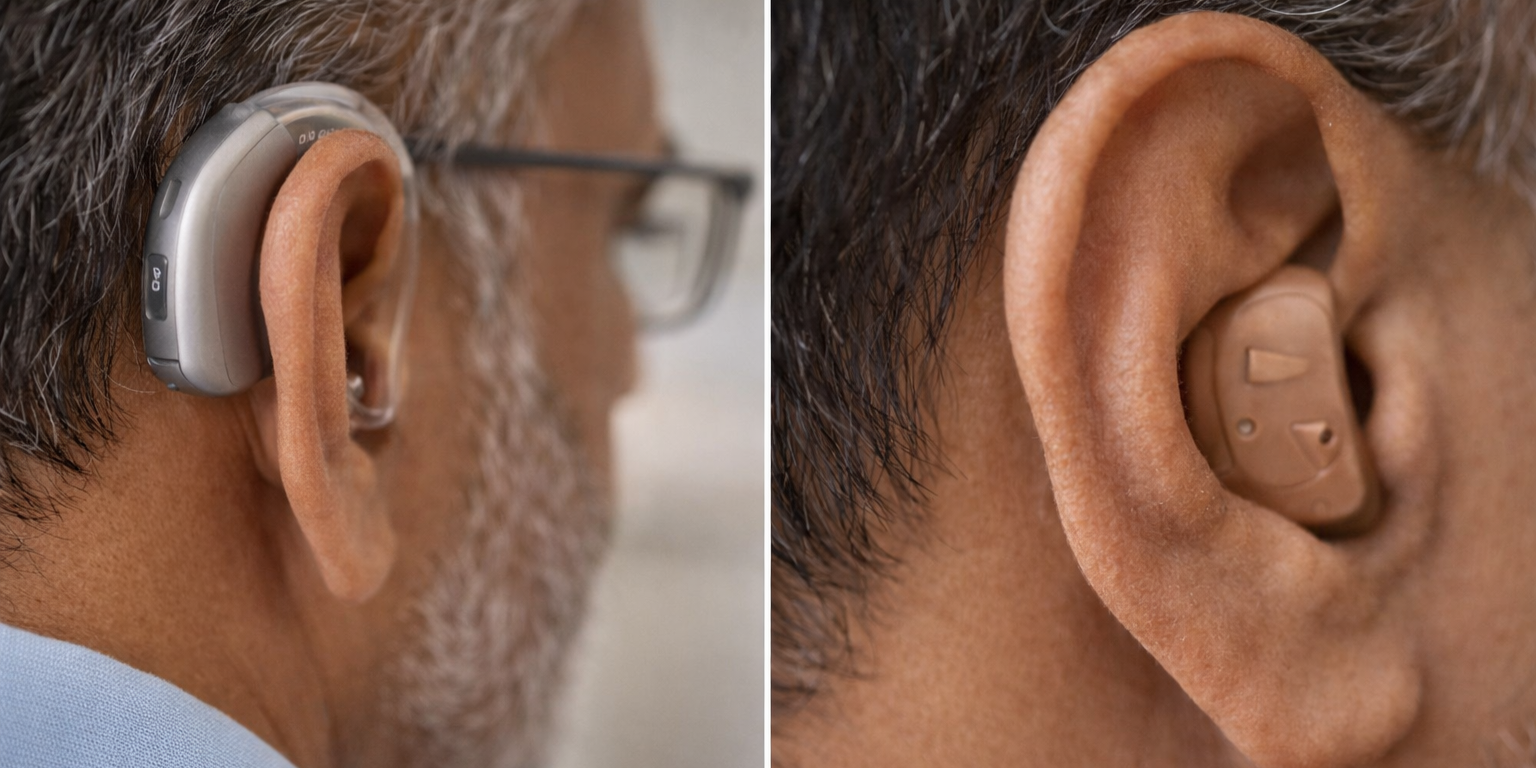
Usually, this doesn’t reverse. But with the right support — like properly fitted hearing aids — communication becomes much easier again.
When Both Things Happen Together
Sometimes it isn’t one or the other.
There might be a blockage and inner ear involvement at the same time.
That combination is called mixed hearing loss.
In these cases, part of the issue may improve with medical treatment, while another part may still need hearing support.
This is where proper diagnosis really matters. Otherwise, it becomes confusing very quickly.
Why This Difference Matters in Real Life
From a patient’s point of view, all hearing loss tends to feel similar in the beginning. But the approach changes once the type is understood. In conductive cases, treatment can often resolve a large part of the issue, while sensorineural loss usually requires a focus on improving clarity and reducing listening effort. When it’s mixed, both approaches are needed together. Without identifying the Types of Hearing Loss, people often try random solutions and end up feeling disappointed.
What Happens During the Test
Many people expect a complicated process.
It’s actually quite simple.
You sit in a quiet space, respond to sounds, and sometimes repeat words. That’s enough for the audiologist to understand not just how much you hear, but how you’re hearing.
That “how” is what reveals the type.
A Simple Way to Remember
If sound isn’t reaching properly, it’s likely conductive. When sound reaches the ear but lacks clarity, it points to sensorineural loss. In cases where both issues exist together, it is considered mixed hearing loss.
Final Thought
Hearing loss can feel the same on the surface, but the reason behind it can be very different.
Once you understand what type it is, the next steps become much clearer. No guesswork. No confusion.
If something feels off with your hearing, getting it checked is the easiest way to move forward.
If you’ve noticed changes in your hearing, don’t wait—book a quick hearing test to understand the Types of Hearing Loss you may have and get the right guidance for it.